What’s the difference between Pesto and Chimichurri – two delicious, zesty fresh herb sauces! When to use each of these sauces and the best recipes for both.
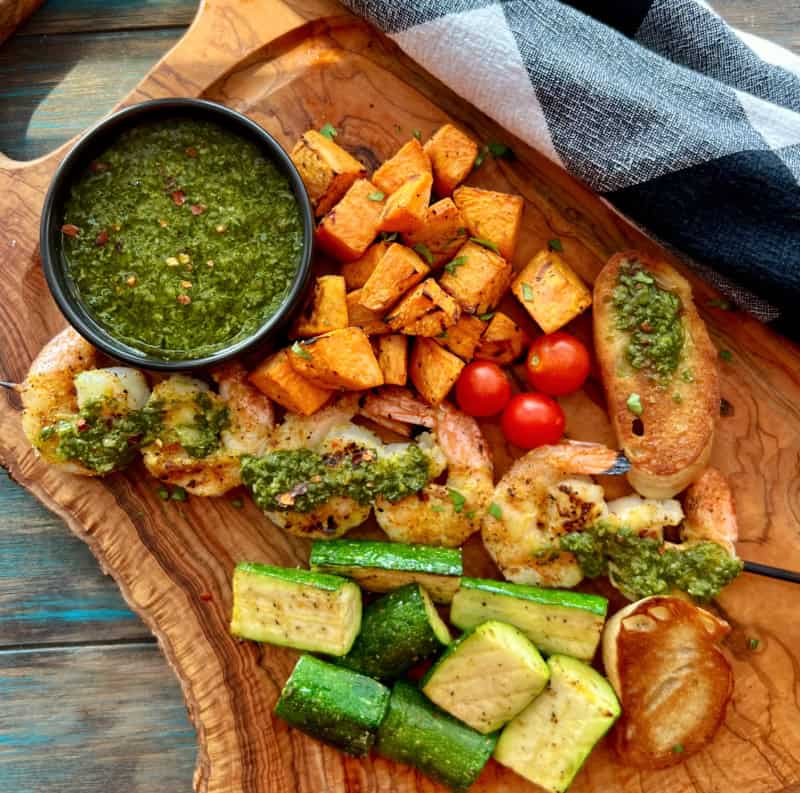
If you’ve ever wondered the difference between Pesto and Chimichurri, you’re not alone.
These flavor packed sauces look similar, but they each bring their own bold personality to the table and there actually is a right moment to use each. I’m also sharing the best recipes for each because there’s room for both in your kitchen!
I’m breaking down the differences between chimichurri and pesto, sharing great ways to use both, and drop in some pro tips to take your sauces to the next level.
What Is Pesto?
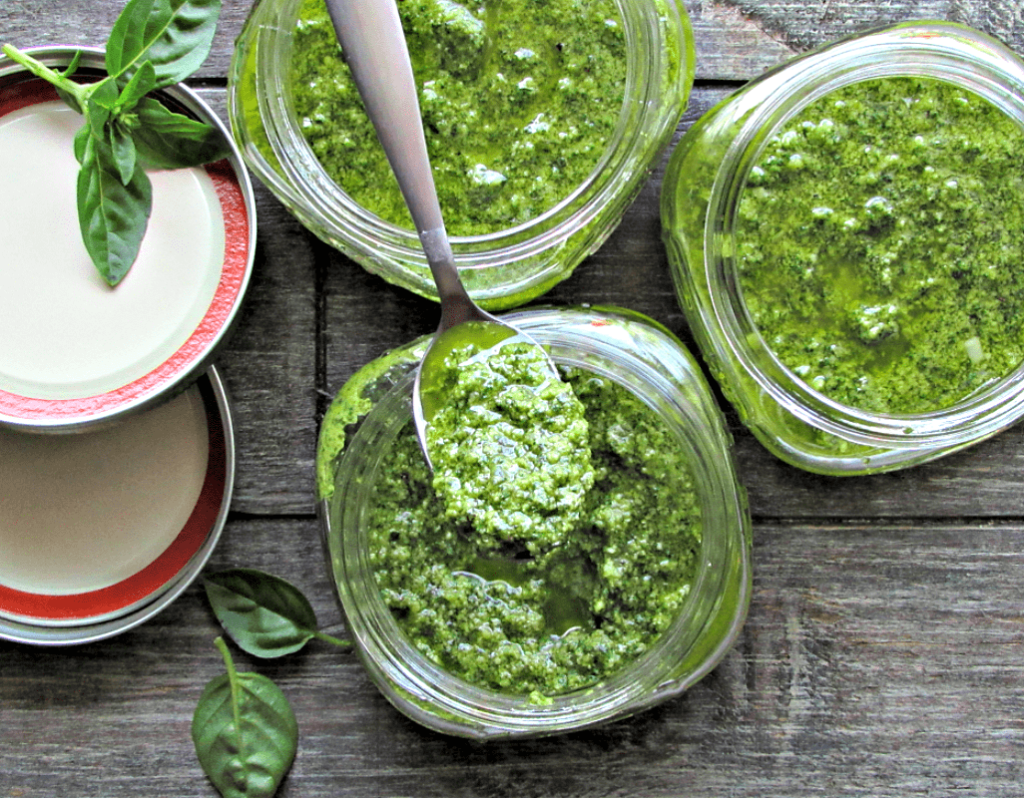
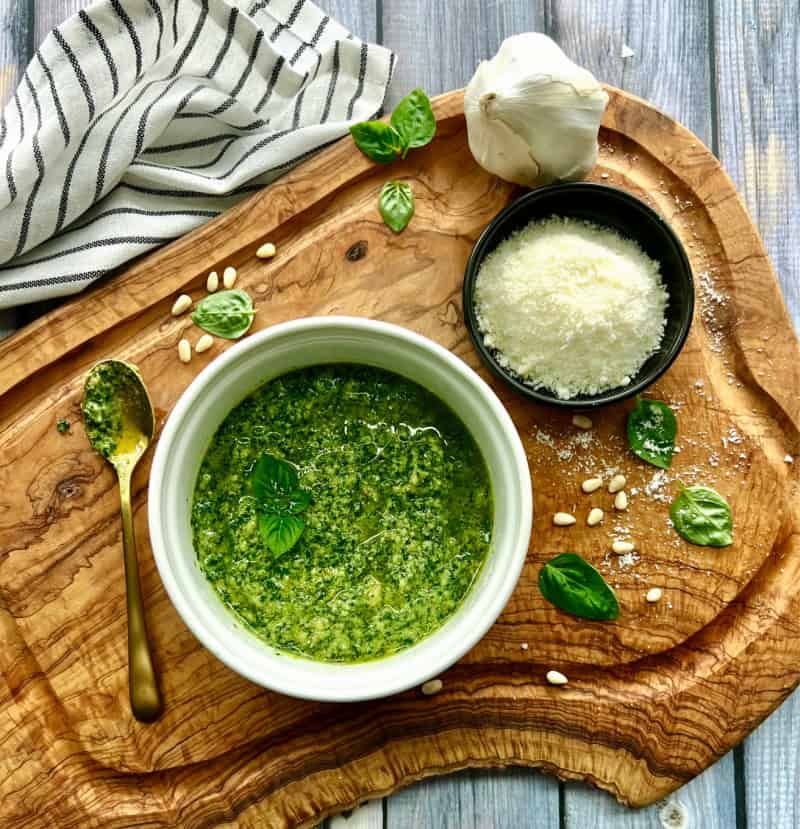
Pesto is an uncooked Italian sauce traditionally made with fresh basil, pine nuts, parmesan cheese, garlic cloves and extra virgin olive oil. Get the full link to the recipe here
The ingredients are added to a food processor and blended. It can be completely smooth or have a slightly grainy texture.
The flavor of homemade pesto comes from the fresh basil leaves and parmesan cheese. The slightly texture is from pine or other nuts used.
It makes a great base for pizza or as a pasta sauce, like this Pesto Pasta – an easy pasta recipe that’s my personal favorite and one of the most popular recipes on the blog.
Other uses for pesto:
- Drizzle over roasted green beans or grilled vegetables.
- Pesto Orzo Salad – cold salad packed with fresh vegetables and dressed in pesto
- As a dipping sauce for crusty bread or mozzarella sticks
- Slathered on bread for a chicken sandwich with pesto mayonnaise sandwich spread
- Pesto Mac and Cheese. Just how it sounds – creamy mac and cheese elevated with fresh herb flavor.
How long does pesto last in the fridge?
Both homemade pesto and chimichurri will keep in the fridge in an airtight container for 3 days up to one week.
To extend the shelf life of pesto, cover it with a thin layer of olive oil then store in the fridge in the airtight container. hort term (4-5 days), keep in an airtight container in the fridge. Add a thin layer of olive oil on the top to keep the pesto that vibrant green color.
If pesto changes color, turns brownish, has an off smell or shows signs of mold, throw it away.
To freeze pesto for later use, store in ice cube trays and thaw for quick weeknight pizza, pasta or add to soups and sauces. It’ll keep in the freezer up to 6 months.
Basil Pesto Ingredients:
Click HERE for full printable recipe and easy instructions.
- fresh basil and spinach
- walnuts, pine nuts or pecans
- grated parmesan cheese
- garlic cloves
- lemon juice and zest
- extra virgin olive oil
- salt and black pepper
How to Make Basil Pesto:
Toast some walnuts (or sub pine nuts or pecans) in a dry skillet for a couple of minutes until they’re golden and smell amazing then set them aside to cool.
Now add the basil, spinach, those toasted nuts, Parmesan cheese, minced garlic, a squeeze of lemon juice and the zest to a food processor.
Pulse everything for about a minute to break it down then stream in some of the olive oil until it’s blended. Season it up with salt and black pepper to taste then spoon it into jars or another airtight container then pop in the fridge or freezer.
What Is Chimichurri?
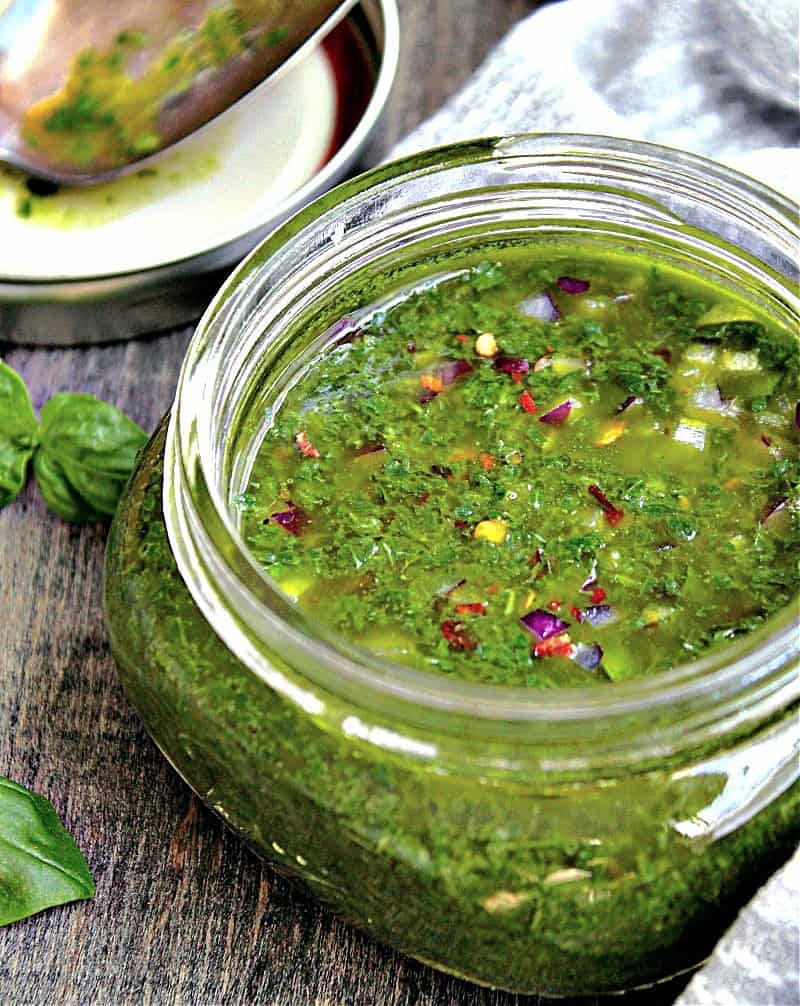
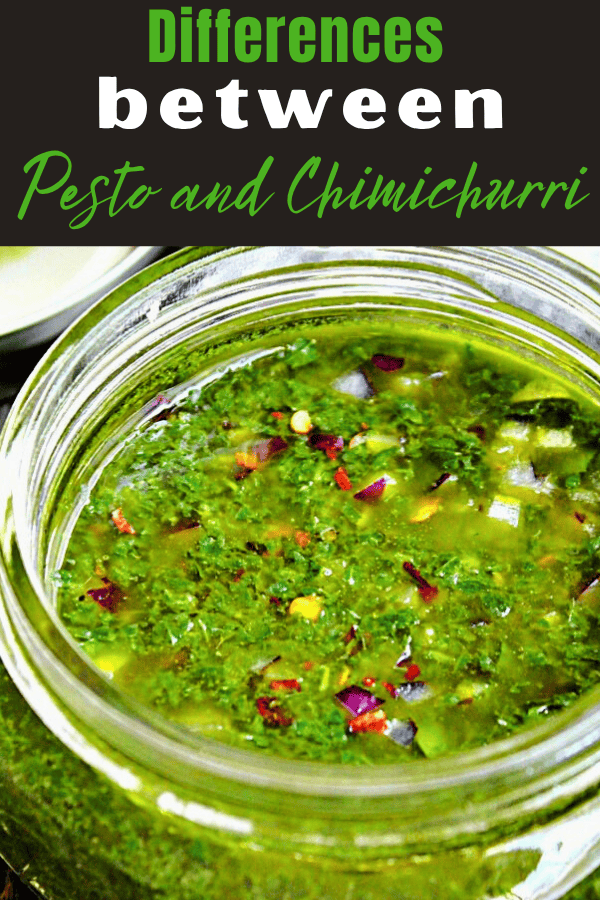
Chimichurri is a bold, fresh sauce from Argentina made with two herbs: fresh flat-leaf parsley as the main herb and a secondary herb such as fresh oregano, basil or cilantro. Get the full link to the recipe here
It also includes red wine vinegar, fresh garlic, red pepper flakes, olive oil, red onion or shallots and sometimes lemon zest. It’s s a bit more tangy and spicy than pesto and has a looser texture – like a salsa verde.
Chimichurri sauce is spooned over grilled meat (sometimes at room temperature), like skirt steak or seafood. It’s a classic Argentinian sauce that you can enjoy at home anytime.
Other uses for chimichurri:
- Delicious on a variety of meats like beef, pork, lamb, or chicken
- Drizzle on roasted veggies or baked potatoes
- As a salad dressing with a kick
- As a sassy marinade or finishing sauce for seafood
Pro tip:
Chimichurri is best when it’s made fresh and left to sit at room temperature for about 30 minutes so the flavors come together. Leftovers will keep in the fridge for 3-4 days.
Chimichurri Ingredients:
Click HERE for the full printable recipe and easy instructions.
- fresh basil leaves
- Italian parsley
- red onion
- extra virgin olive oil
- red wine vinegar
- lemon juice
- garlic cloves
- salt and black pepper
- crushed red pepper flakes
How to make this chimichurri sauce recipe:
Grab your blender or food processor, toss in a big handful of fresh basil and some parsley, rough chopped red onion, garlic, a splash of red wine vinegar, a squeeze of lemon juice and a pinch of red pepper flakes for a little kick.
Pulse a few times until the herbs are finely chopped then drizzle in the olive oil until the whole thing transforms into a vibrant sauce.
Give it a taste, season with salt and pepper – done and delicious.
Key Differences between Pesto and Chimichurri:
| Feature | Pesto | Chimichurri |
|---|---|---|
| Origin | Italy | Argentina |
| Main Herbs | Fresh basil | Blend of fresh parsley and cilantro or basil |
| Fat | Olive oil, pine nuts, parmesan cheese | Olive oil |
| Acid | Lemon juice | Red wine vinegar, lemon or lime juice |
| Texture | Creamy, blended | Chunkier |
| Use | Pasta, pizza, bread dip, pasta salad | Topping for grilled meat, marinade, finish for seafood |
| Flavor | Rich, nutty, cheesy | Tangy, garlicky, herby |
Can You Swap Pesto and Chimichurri?
Yes you can – but I don’t recommend it. Both are green sauces and herb-forward but their flavor profiles are different.
Pesto is rich and nutty – chimichurri is sharper, acidic, and spicy. Use each where its flavor shines best, but by all means – don’t be afraid to experiment!
Each is a simple recipe, and offers color and adds a punch of lots of flavor.
In conclusion Pesto and Chimichurri:
Both pesto and chimichurri are easy to make, elevate any dish, are a great use of fresh herbs (especially in the summertime!) and deserve a permanent place in your kitchen.
They’re easy to make, packed with fresh herbs, and perfect for quick meals or last-minute entertaining and since both freeze well in ice cube trays, you can have these flavors on demand.
Enjoy!

FOLLOW ME on Facebook, Instagram and Pinterest for more easy, tasty recipes!